Emergency Roof Leak Repair & Active Water Containment in Spokane, WA
When heavy winter snow melts on upper roof slopes, hits frozen eaves, and pours through ceiling drywall during a Spokane freeze-thaw cycle, structural degradation escalates rapidly. Ceiling drywall loses mechanical cohesion and collapses under trapped water weight, blown-in cellulose and fiberglass insulation compress and lose thermal resistance, and electrical fixtures short-circuit. Roof Expert USA dispatches independent, licensed Washington roofing contractors equipped with non-destructive FLIR thermal imaging diagnostics to pinpoint hidden winter water pathways and implement immediate containment across Spokane, Spokane Valley, Liberty Lake, and Cheney.
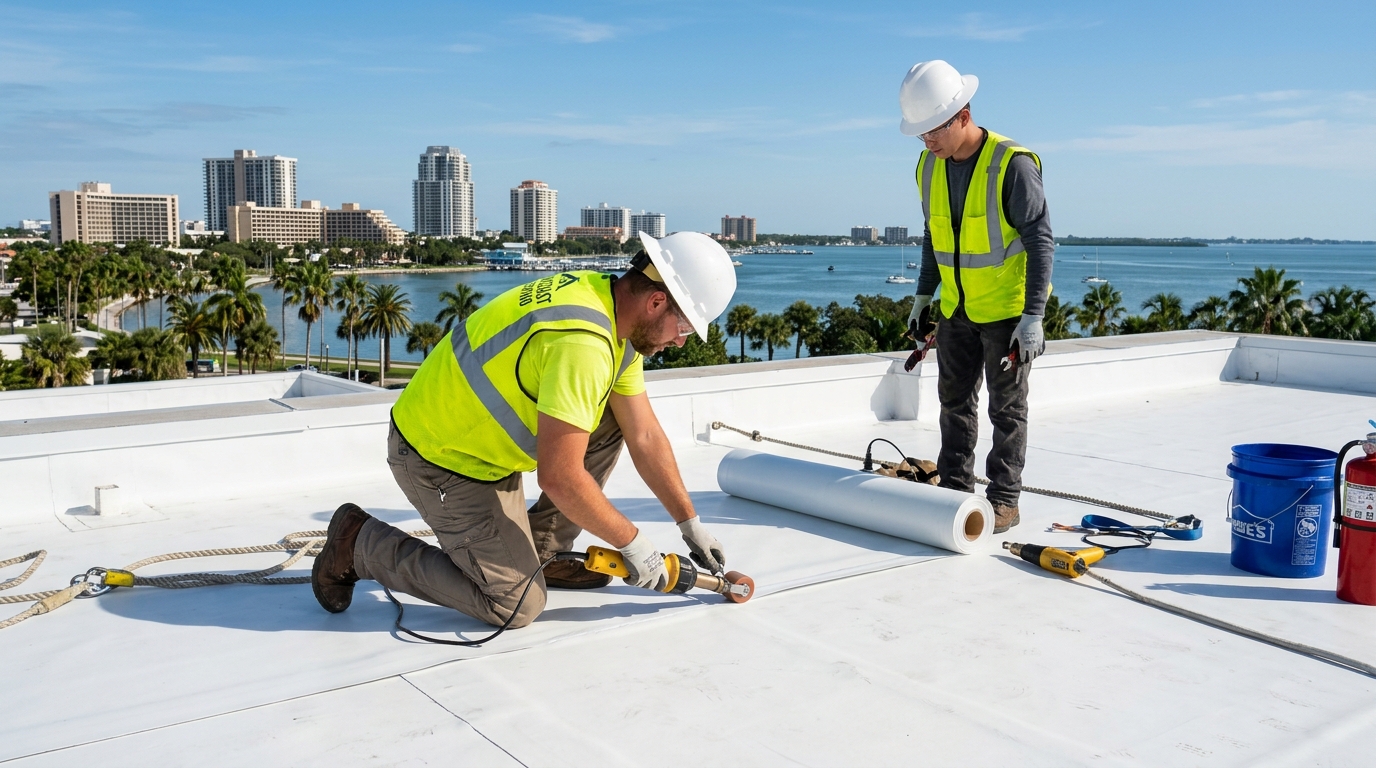
Key Technical Engineering Protocols • Spokane Field Operations
- Non-Destructive Diagnostic Mapping: FLIR Thermal Infrared Moisture Mapping to trace hidden attic water migration pathways without destructive wall demolition.
- Immediate Physical Containment: Low-Pressure Ice Dam Steam Relief & heavy-duty rafter-anchored winter storm tarping.
- Regulatory Code Adherence: Full Compliance with Washington State Building Code (WSBC Chapter 51-51 WAC) and Spokane Municipal Code.
- Direct Dispatch Transparency: Independent Washington L&I Registered Contractor Dispatch ensuring direct voice routing and verified liability insurance.
1. Regional Inland Northwest Climate Dynamics & Severe Storm Exposure
The Inland Northwest continental climate subjects residential and commercial roofs to extreme hydrological and thermal stress. Receiving 44 to 50+ inches of snow annually alongside prolonged sub-zero cold snaps, Spokane roof systems endure severe freeze-thaw cycles. When radiant attic heat melts snow from below while outside air temperatures hover in the teens, liquid water migrates down to cold uninsulated eaves and refreezes into thick ice dams. The trapped meltwater backs up under architectural shingles, dissolves adhesive seal strips, and leaks into attic spaces. Dispatched contractors evaluate these regional forces to stop water ingress at the exterior barrier.
2. Non-Destructive Moisture Diagnostics & FLIR Thermal Tracing
Locating the exact point of exterior failure during freezing winter conditions requires sophisticated non-destructive diagnostics because water routinely travels along sloped rafters, ceiling drywall paper, and plumbing chases for 15 to 30 feet before breaking through interior plaster or sheetrock. Dispatched technicians deploy calibrated FLIR high-resolution thermal imaging cameras to identify subtle evaporative cooling signatures, illuminating hidden moisture plumes traveling through enclosed rafter bays long before ceiling blisters burst. Pinless electronic moisture meters map structural saturation boundaries across OSB decking and framing lumber without puncturing vapor barriers, establishing verified loss scopes for insurance adjusters.
3. Step-by-Step Substrate Restoration Methodology
Emergency containment follows a methodical, step-by-step restoration workflow. First, technicians secure the exterior breach using commercial-grade low-pressure steam equipment to cut drainage channels through frozen ice dams, relieving hydrostatic pressure without mechanical hammer impacts that shatter brittle asphalt shingles. In severe wind-damage or tree-strike events, heavy-duty 12-mil reinforced polyethylene tarps are secured using 2x4 lumber battens screwed directly into structural rafters—never nailed blindly into open shingles—preventing wind tear-off during 50+ mph Spokane windstorms. Once immediate water entry is halted, compromised shingles, rotted wood decking, and cracked flashings are prepared for permanent restoration.
4. Washington State Building Codes & Contractor Licensing Compliance
All dispatched roofing professionals maintain active registration with the Washington State Department of Labor & Industries (L&I) under Revised Code of Washington (RCW) Chapter 18.27. Work conforms strictly to the Spokane Municipal Code (Title 17F) and Washington State Building Code (WSBC Chapter 51-51 WAC). This includes mandatory self-adhering ice-and-water underlayment installations extending 24 inches inside the interior heated wall line and adherence to manufacturer technical specifications to preserve commercial warranty coverage.
5. Preventative Property Maintenance & Winter Storm Preparedness
Property owners can prevent catastrophic structural leaks through proactive seasonal maintenance. Ensure gutters, downspouts, and valley channels are thoroughly cleared of ponderosa pine needles, cones, and organic debris before the first freeze in November. Schedule professional attic insulation and ventilation audits to ensure soffit intake baffles and ridge vents maintain uniform cold roof deck temperatures, preventing ice dam formation at the eaves. Promptly replace brittle rubber pipe boots and inspect chimney flashings after severe winter wind events.
On-Site Emergency Triage & Homeowner Safety Protocols
While awaiting on-site contractor arrival, prioritize life-safety over physical property preservation. Never step onto an icy, wet, or snow-covered roof slope, as sub-zero frost offers zero friction and presents severe fall hazards. If water is dripping near recessed canister lights, ceiling fans, or distribution panels, immediately switch off the associated circuit breakers at your main electrical electrical panel.
Relieve hydraulic pressure behind bulging drywall bubbles by piercing the center with a screwdriver over a collection bucket; this controlled drainage prevents sudden wide-scale drywall collapse. Move furniture and electronics to unaffected areas and keep ventilation flowing to slow interior moisture saturation.
Frequently Asked Questions: Active Roof Leak Containment
How quickly can emergency containment be deployed during a Spokane winter storm?
Our dispatch desk operates 24/7/365 to connect property owners with on-call independent Washington L&I registered roofing technicians. Response times depend on winter road conditions, snow accumulation, crew highway safety, and call volumes, but immediate verbal triage begins the moment you call to isolate electrical hazards and control water flow.
Will emergency roof patching hold up during sub-zero Spokane temperatures?
Yes. Technicians use commercial cold-weather elastomeric polymer compounds and specialized winter adhesive membranes engineered specifically to adhere to freezing substrates, preventing water from penetrating framing until warmer spring weather permits permanent architectural repairs.
Does homeowner insurance cover sudden roof leak containment from ice dams in Washington?
Most standard Washington homeowners insurance policies cover emergency mitigation measures necessary to prevent secondary damage caused by sudden weather events, windstorms, or ice dam water intrusion. Dispatched contractors compile itemized photo documentation to support your claim.
Need Immediate Assistance with
Speak directly with on-call dispatch coordinators to route licensed Washington L&I roofing contractors equipped for rapid mitigation. Strictly zero web forms.
DISPATCH HOTLINE: (888) 208-4155 CALL: (888) 208-4155