Emergency Roof Tarping & Severe Storm Containment in Spokane, WA
When severe windstorms tear through Spokane's mature ponderosa pine canopy or violent gusts rip architectural shingles from ridge lines, immediate weather containment is vital to prevent catastrophic interior water damage. Inland Northwest winter storms bring freezing rain and heavy snowfall behind wind fronts, making delay disastrous. Roof Expert USA dispatches emergency tarping specialists across Spokane, Spokane Valley, Liberty Lake, and Cheney to mechanically secure heavy-duty reinforced weather barriers that endure sustained winds, heavy snow loads, and sub-zero temperatures.
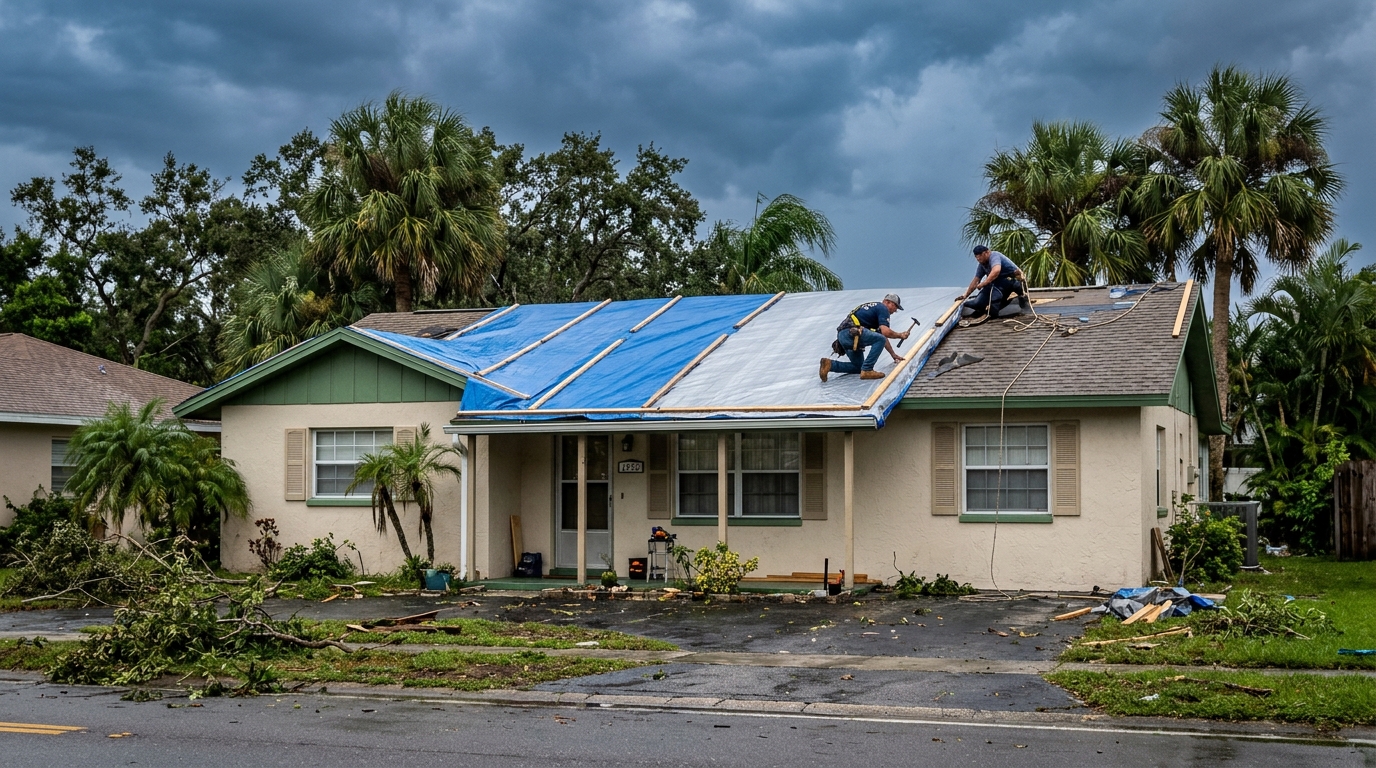
Key Technical Engineering Protocols • Spokane Field Operations
- Non-Destructive Diagnostic Mapping: Heavy-Duty 12-Mil UV-Resistant Reinforced Polyethylene Membranes engineered for sustained snowfall.
- Immediate Physical Containment: 2x4 Batten Mechanical Rafter Anchoring engineered to withstand 60+ mph Inland Northwest wind gusts.
- Regulatory Code Adherence: Over-the-Ridge Continuous Wrapping to prevent hydrostatic wind uplift and snow tunneling.
- Direct Dispatch Transparency: Complete Photographic & Engineering Documentation for expedited insurance claim processing.
1. Regional Inland Northwest Climate Dynamics & Severe Storm Exposure
Spokane's urban landscape features thousands of towering ponderosa pines that pose severe hazards during windstorms and heavy wet snow events. When moisture-saturated snow loads weigh down pine boughs or sustained winds reach 50 to 70 mph across the West Plains and South Hill, heavy limbs snap and plummet onto residential roofs. The resulting kinetic impact punches through 1/2-inch CDX plywood or OSB decking, crushing rafters and puncturing waterproof membranes. Immediate emergency tarping provides a watertight structural shield that arrests water and snow infiltration while engineers assess framing stability.
2. Non-Destructive Moisture Diagnostics & FLIR Thermal Tracing
Emergency crews assess roof breaches using strict safety and structural triage protocols. Before stepping onto storm-damaged surfaces, technicians inspect rafter deflection, collar tie integrity, and ceiling joist stability from inside the attic. Calibrated FLIR thermal imaging cameras scan surrounding ceiling areas to map the perimeter of moisture penetration. Certified technicians locate solid structural framing members to anchor tarping battens, ensuring that temporary weather coverings do not rely on damaged sheathing that could collapse under heavy winter snow accumulation.
3. Step-by-Step Substrate Restoration Methodology
Tarping execution adheres to commercial storm restoration engineering standards. Dispatched technicians utilize premium 12-mil cross-laminated high-density polyethylene tarps with heavy UV inhibitors. The tarp is cut to extend a minimum of 4 feet past the perimeter of damage on all sides, extending completely over the roof ridge to eliminate wind uplift. Tarps are secured using 2x4 wooden battens anchored with corrosion-resistant 3-inch exterior structural screws driven directly into roof rafters. Battens are rolled inside the perimeter edges to create watertight water stops, preventing wind from catching underneath and ripping the barrier away.
4. Washington State Building Codes & Contractor Licensing Compliance
All dispatched emergency tarping crews are registered with the Washington State Department of Labor & Industries (L&I) and adhere strictly to Washington DOSH (WAC Chapter 296-155) fall protection standards. Technicians operate with full-body harnesses, rope grabs, and certified roof anchor brackets rated for 5,000 lbs of tensile pull. Complete photographic documentation of the initial damage, fallen timber, structural breaches, and completed tarp installation is prepared in insurance-standard Xactimate format to support homeowner claims.
5. Preventative Property Maintenance & Winter Storm Preparedness
Property owners facing storm emergencies should immediately contact their insurance carrier to open a claim, as most policies cover emergency mitigation costs necessary to protect the property from secondary water ruin. Homeowners should avoid climbing onto damaged, wet roofs, as wet shingles and moss create extreme slip hazards. Regularly inspect overhanging tree branches within 10 feet of the roofline and have certified arborists trim compromised limbs before winter storm season.
On-Site Emergency Triage & Homeowner Safety Protocols
While awaiting on-site contractor arrival, prioritize life-safety over physical property preservation. Never step onto an icy, wet, or snow-covered roof slope, as sub-zero frost offers zero friction and presents severe fall hazards. If water is dripping near recessed canister lights, ceiling fans, or distribution panels, immediately switch off the associated circuit breakers at your main electrical electrical panel.
Relieve hydraulic pressure behind bulging drywall bubbles by piercing the center with a screwdriver over a collection bucket; this controlled drainage prevents sudden wide-scale drywall collapse. Move furniture and electronics to unaffected areas and keep ventilation flowing to slow interior moisture saturation.
Frequently Asked Questions: Post-Storm Emergency Tarping
How long can a professionally installed emergency tarp remain on a Spokane roof during winter?
A commercial 12-mil cross-laminated tarp anchored with rafter-screwed 2x4 lumber battens is engineered to provide secure weather protection for 60 to 90 days, giving homeowners ample time to negotiate insurance estimates and schedule permanent construction.
Will tarping a roof cause additional damage to surrounding shingles?
Professional crews roll the tarp perimeter into wooden battens and anchor directly into structural rafters or use non-penetrating sandbag counter-weights on low pitches, avoiding blind nailing into good shingles that would cause new leak points.
What should I do if a large ponderosa pine branch is still resting on the roof?
Do not attempt to move the branch yourself. Call our dispatch desk immediately. We coordinate with contractors who work alongside certified crane tree removal specialists to lift limbs safely before tarping begins.
Need Immediate Assistance with
Speak directly with on-call dispatch coordinators to route licensed Washington L&I roofing contractors equipped for rapid mitigation. Strictly zero web forms.
DISPATCH HOTLINE: (888) 208-4155 CALL: (888) 208-4155