Emergency Roof Tarping & Tree Impact Triage in Cheney, WA
Located southwest of Spokane across the rolling basalt hills of the Columbia Plateau, Cheney is home to Eastern Washington University, historic college-town neighborhoods, and expansive rural properties. High wind gusts sweeping across the open agricultural plains frequently tear shingles from exposed roof planes and snap mature evergreen limbs onto residential decking. Roof Expert USA dispatches emergency tarping specialists to install engineered weather barriers and stabilize storm breaches throughout Cheney.
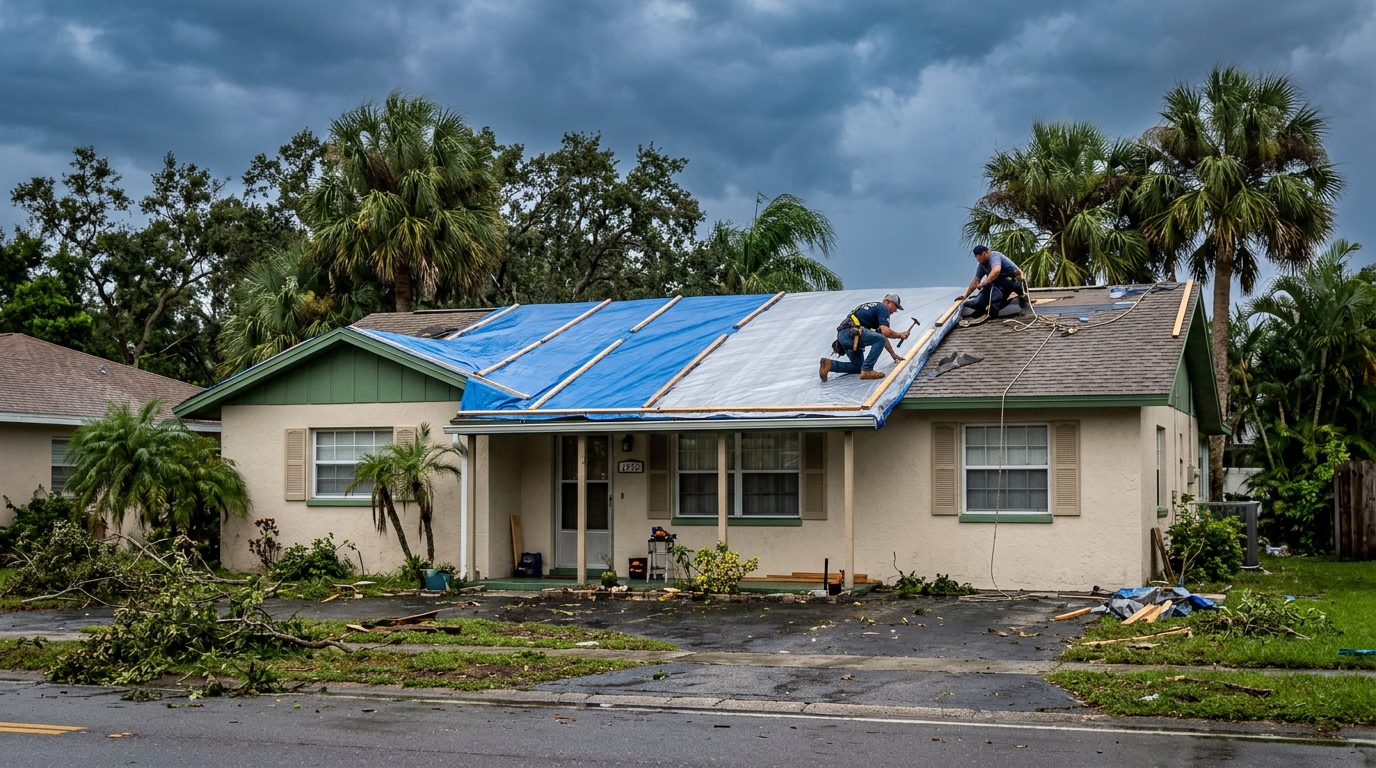
Localized Microclimate & Repair Protocols • Cheney Roof Tarping
- Rapid Response: Heavy-Duty 12-Mil UV-Resistant Polyethylene Tarps with Rafter-Anchored 2x4 Battens.
- Diagnostic Precision: Rapid Triage for Open Plains Wind Shear and Falling Tree Branch Impacts.
- Substrate Remediation: Specialized Stabilization for Architectural Shingle, Metal, and Flat Assemblies.
- Contractor Credentialing: Washington L&I Registered Contractors with comprehensive insurance claim photo packages.
1. Regional Inland Northwest Microclimate Dynamics & Severe Storm Exposure
Cheney's exposed plains geography creates severe wind exposure. Without mountain barriers to break up storm fronts, southwesterly winds sweeping across Eastern Washington accelerate over the open basalt plateaus, frequently recording sustained gusts of 50 to 65 mph. When combined with freezing winter precipitation or heavy wet snow, mature trees shed massive branches that fracture roof framing. Immediate emergency tarping provides a watertight structural shield that arrests water infiltration while engineers assess framing stability.
2. Non-Destructive Moisture Diagnostics & FLIR Thermal Tracing
Safety and structural evaluation precede any rooftop work. Technicians inspect interior attic framing to verify structural stability before accessing storm-damaged areas. High-resolution FLIR thermal cameras scan ceilings around the impact zone to delineate water intrusion boundaries. Crews identify solid structural rafters capable of supporting mechanical timber battens without stressing damaged roof sheathing.
3. Step-by-Step Substrate Restoration Methodology
Tarping methodology in Cheney adheres to premium engineered standards. Dispatched technicians utilize heavy-duty 12-mil cross-laminated UV-resistant polyethylene tarps. The barrier extends completely over the roof ridge to eliminate wind uplift. Perimeter edges and seams are rolled into 2x4 lumber battens and secured directly into rafters using 3-inch exterior structural screws. This robust installation withstands 60+ mph wind gusts without tearing or flapping.
4. State Building Codes & Contractor Licensing Compliance
All dispatched emergency crews are registered with the Washington State Department of Labor & Industries (L&I) and strictly follow Washington DOSH fall protection standards, operating with certified harness systems and temporary anchor brackets. Technicians compile detailed digital photo documentation and itemized Xactimate scopes to support insurance claim settlements.
5. Preventative Property Maintenance & Winter Storm Preparedness
Cheney homeowners and rental property managers should regularly assess mature trees within strike distance of roof structures. Following any major wind event, inspect roof valleys and gutters for accumulated pine needles that trap moisture and accelerate shingle degradation.
On-Site Emergency Triage & Homeowner Safety Protocols
While awaiting on-site contractor arrival in Cheney Roof Tarping, prioritize life-safety over physical property preservation. Never step onto an icy, wet, or snow-covered roof slope, as sub-zero frost offers zero friction and presents severe fall hazards. If water is dripping near recessed canister lights, ceiling fans, or distribution panels, immediately switch off the associated circuit breakers at your main electrical panel.
Relieve hydraulic pressure behind bulging drywall bubbles by piercing the center with a screwdriver over a collection bucket; this controlled drainage prevents sudden wide-scale drywall collapse. Move furniture and electronics to unaffected areas and keep ventilation flowing to slow interior moisture saturation.
Frequently Asked Questions: Cheney Roof Tarping
How long does it take to secure an emergency tarp in Cheney?
Depending on roof pitch, damage extent, and weather conditions, a professional emergency tarp installation typically takes 1.5 to 3 hours, providing immediate watertight security.
Can an emergency tarp hold up during subsequent Cheney high-wind storms?
Yes. Because our dispatched technicians anchor the 12-mil tarp with 2x4 lumber battens screwed directly into rafters and wrap the ridge line, it is engineered to withstand sustained winds up to 60+ mph.
Will emergency tarping prevent mold growth in my Cheney home?
By immediately stopping water ingress, emergency tarping halts moisture accumulation. Pairing tarping with indoor dehumidification prevents airborne mold spores from germinating in wet insulation.
Experiencing a Roofing Emergency in
Speak directly with on-call dispatch coordinators to route licensed Washington L&I roofing contractors equipped for rapid mitigation. Strictly zero web forms.
DISPATCH HOTLINE: (888) 208-4155 CALL: (888) 208-4155