Chimney Flashing & Roof Valley Leak Repair in Spokane, WA
Chimney flashings and roof valleys represent the most vulnerable architectural transitions on Spokane homes during winter. Exposed to 44+ inches of snowfall and extreme sub-zero freeze-thaw cycles, masonry chimneys absorb water while valley channels collect snow drifts and ice dams that back up under roofing courses. Roof Expert USA dispatches skilled metal artisans and L&I-registered roofing technicians to rebuild failed chimney flashings, install custom sheet metal crickets, and restore valley watercourses throughout the Spokane metropolitan area.
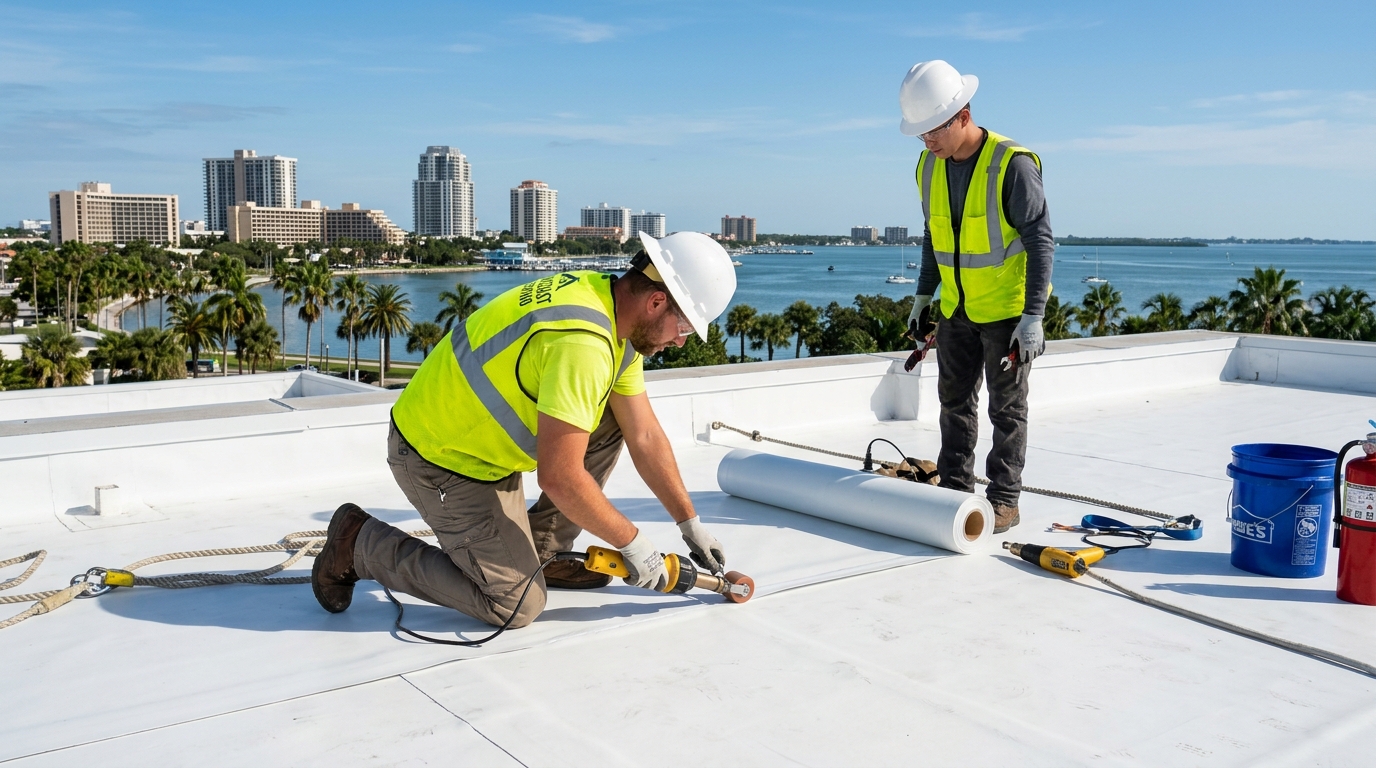
Key Technical Engineering Protocols • Spokane Field Operations
- Non-Destructive Diagnostic Mapping: Precision Diamond-Kerf Reglet Counter-Flashing embedded deep into chimney masonry mortar joints.
- Immediate Physical Containment: Custom Fabricated Sheet Metal Snow Crickets diverting snowpacks away from rear chimney walls.
- Regulatory Code Adherence: Heavy W-Profile Valley Flashing with self-adhering ice-and-water membrane underlayment.
- Direct Dispatch Transparency: Independent Washington L&I Registered Contractor Referral ensuring code-compliant craftsmanship.
1. Regional Inland Northwest Climate Dynamics & Severe Storm Exposure
Spokane's historic South Hill Craftsman bungalows, vintage brick Tudors, and rural properties frequently feature large masonry chimneys. In the Inland Northwest's sub-zero winter environment, unsealed brick and mortar joints absorb moisture that freezes and expands, causing mortar spalling. When chimneys wider than 30 inches lack a code-compliant sheet metal cricket (diverter saddle) on the uphill slope, heavy snow accumulates behind the chimney, creating a massive ice dam that forces meltwater behind counter-flashings into attic living spaces. Valley channels that converge multiple roof planes funnel massive volumes of snow runoff, quickly overflowing when choked by frozen ice ridges.
2. Non-Destructive Moisture Diagnostics & FLIR Thermal Tracing
Technicians perform detailed forensic inspections of chimney intersections and valley troughs. Using electronic pinless moisture meters, inspectors evaluate decking saturation along chimney framing chases and valley troughs. Technicians examine the integrity of step flashing tins, looking for rust perforations, improper face-nailing, and dried caulk beads. Chimney counter-flashing is inspected to verify whether it is properly ground into masonry mortar joints with a mechanical reglet groove or merely caulked against the brick surface.
3. Step-by-Step Substrate Restoration Methodology
Permanent flashing restoration requires custom metal fabrication and architectural masonry work. For chimneys wider than 30 inches, technicians construct a code-compliant custom sheet metal cricket using 26-gauge galvanized steel, aluminum, or durable copper. The uphill roof deck is waterproofed with ASTM D1970 self-adhering membrane extending 18 inches up the chimney wall. Individual L-shaped step flashing tins are woven seamlessly with each shingle course, and counter-flashing is mechanically wedged into a precision-cut 1.5-inch diamond saw kerf and sealed with polyurethane sealant. Valley restorations replace deteriorated metal with heavy W-valley flashing supported by double-layer ice-and-water underlayment.
4. Washington State Building Codes & Contractor Licensing Compliance
All flashing and valley rebuilds strictly adhere to Spokane Municipal Code Section 17F and Sheet Metal and Air Conditioning Contractors' National Association (SMACNA) standards. Contractors are registered with the Washington State Department of Labor & Industries (L&I) and carry full workers' compensation and general liability coverage.
5. Preventative Property Maintenance & Winter Storm Preparedness
Homeowners should inspect chimney mortar joints and flashing caulk annually. Never rely on temporary asphalt roof cement (tar) around chimney bases, as tar dries, cracks, and traps moisture against brickwork, accelerating freeze-thaw spalling. Keep roof valleys clear of fallen leaves and needles by gently sweeping or blowing them clear before the winter freeze, ensuring unimpeded stormwater drainage.
On-Site Emergency Triage & Homeowner Safety Protocols
While awaiting on-site contractor arrival, prioritize life-safety over physical property preservation. Never step onto an icy, wet, or snow-covered roof slope, as sub-zero frost offers zero friction and presents severe fall hazards. If water is dripping near recessed canister lights, ceiling fans, or distribution panels, immediately switch off the associated circuit breakers at your main electrical electrical panel.
Relieve hydraulic pressure behind bulging drywall bubbles by piercing the center with a screwdriver over a collection bucket; this controlled drainage prevents sudden wide-scale drywall collapse. Move furniture and electronics to unaffected areas and keep ventilation flowing to slow interior moisture saturation.
Frequently Asked Questions: Chimney Cricket & Flashing Repair
Why does my chimney only leak in winter when snow melts?
Heavy snow accumulates on the uphill side of the chimney. Heat escaping through the chimney flue melts the snowpack from underneath, but the water cannot drain away because the lower roof remains frozen. Without a custom metal cricket and stepped counter-flashing, meltwater pools and penetrates behind flashing joints.
What is a chimney cricket, and is it required by code in Spokane?
A chimney cricket (saddle) is an elevated peaked ridge built behind a chimney to split water and snow around both sides of the masonry flue. Under Washington State Building Code (IRC Section R903.2.2), crickets are mandatory for any chimney wider than 30 inches measured parallel to the roof ridge.
Can leaking chimney flashing be repaired without rebuilding the brick chimney?
Yes. If the masonry itself is sound, contractors install new step flashings, saw-cut diamond reglet grooves for custom counter-flashings, and install self-adhering ice-and-water underlayment without costly chimney reconstruction.
Need Immediate Assistance with
Speak directly with on-call dispatch coordinators to route licensed Washington L&I roofing contractors equipped for rapid mitigation. Strictly zero web forms.
DISPATCH HOTLINE: (888) 208-4155 CALL: (888) 208-4155