Flat Roof Ponding Repair & Membrane Seam Triage in Spokane, WA
Low-slope and flat roof assemblies on Spokane commercial buildings, mid-century modern residences, and residential room additions face immense winter structural challenges. Heavy snow accumulation, ice-blocked scupper drains, and standing meltwater create severe ponding conditions that stress structural framing and degrade membrane seams. Roof Expert USA coordinates rapid emergency triage, scupper ice clearing, and seam welding for TPO, PVC, and built-up roofing (BUR) membranes across Spokane and Spokane Valley.
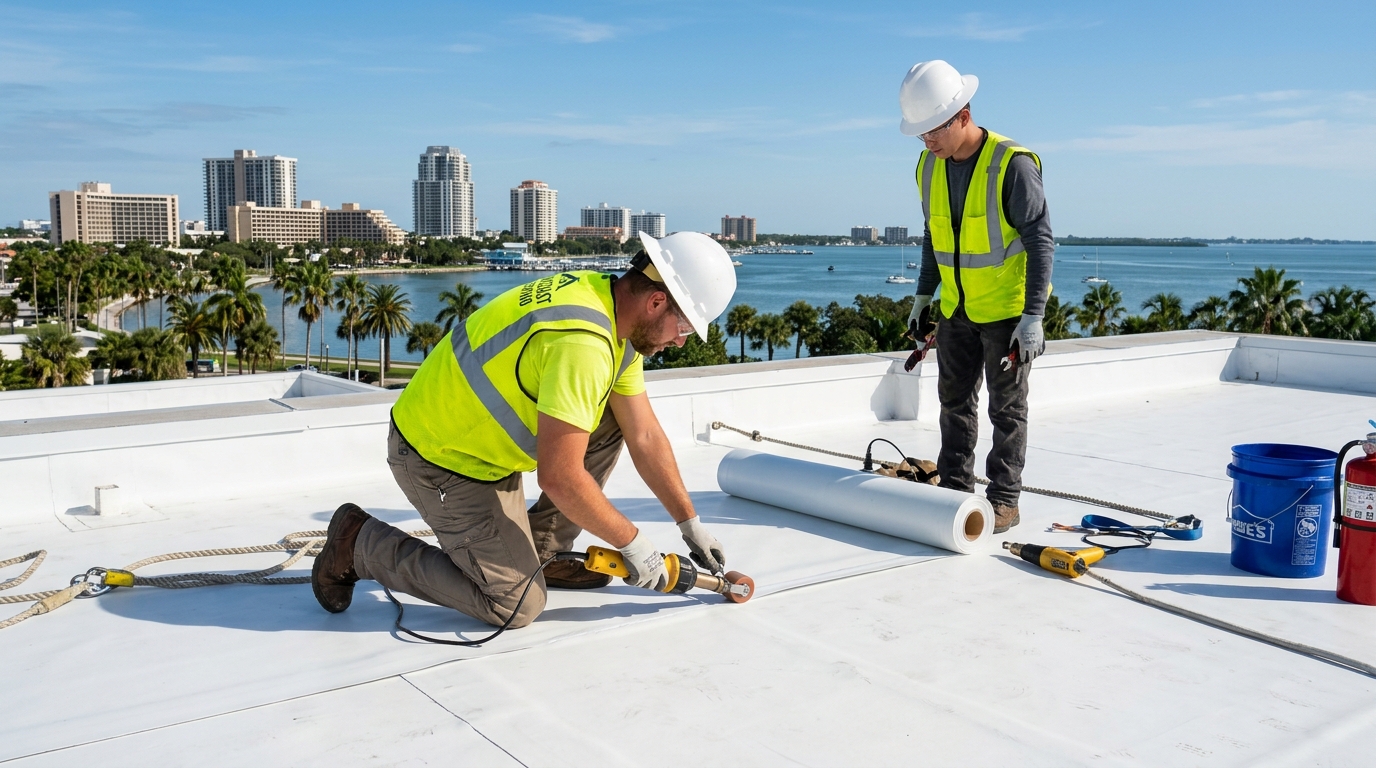
Key Technical Engineering Protocols • Spokane Field Operations
- Non-Destructive Diagnostic Mapping: Hot-Air Membrane Seam Welding for permanent TPO, PVC, and EPDM puncture restoration.
- Immediate Physical Containment: Low-Pressure Steam Scupper & Internal Drain Clearing to eliminate destructive ponding water.
- Regulatory Code Adherence: Tapered Polyisocyanurate Insulation Crickets engineered to restore positive positive roof drainage.
- Direct Dispatch Transparency: Independent Washington L&I Registered Contractor Referral ensuring commercial-grade quality.
1. Regional Inland Northwest Climate Dynamics & Severe Storm Exposure
National roofing standards define 'ponding water' as any standing water that remains on a roof deck 48 hours after precipitation ceases. In Spokane winters, ponding is compounded by freeze-thaw cycles. Meltwater pools in low areas created by structural rafter deflection; when night temperatures drop below zero, the standing water freezes into solid ice. As ice expands, it exerts severe mechanical shear forces on membrane seams, pulling welded laps apart and puncturing membrane sheets along gravel stops and parapet flashings.
2. Non-Destructive Moisture Diagnostics & FLIR Thermal Tracing
Emergency crews conduct comprehensive low-slope assessments to diagnose drainage blockages and membrane integrity. Dispatched technicians clear frozen scuppers, interior drains, and collector boxes using low-pressure steam, safely releasing trapped water without puncturing the roof membrane. Technicians perform electronic moisture probe testing and FLIR infrared scans to determine if water has penetrated beneath the top membrane into polyisocyanurate (polyiso) insulation boards.
3. Step-by-Step Substrate Restoration Methodology
Emergency membrane stabilization restores watertight integrity. For thermoplastic systems (TPO and PVC), technicians dry the saturated area and execute robotic or handheld hot-air welds, fusing reinforced patch membranes directly over failed seams. For modified bitumen or built-up asphalt roofs, technicians apply cold-process elastomeric adhesives and polyester reinforcement fabric. When persistent ponding is caused by structural low spots, permanent restoration incorporates tapered polyiso insulation crickets to create positive positive slope toward drainage points.
4. Washington State Building Codes & Contractor Licensing Compliance
All low-slope and flat roof repairs strictly comply with Spokane Municipal Code Chapter 17F, Washington State Energy Code (WSEC), and National Roofing Contractors Association (NRCA) low-slope manuals. Contractors are fully licensed with the Washington State Department of Labor & Industries (L&I) and carry specialized commercial roofing endorsements.
5. Preventative Property Maintenance & Winter Storm Preparedness
Building owners should inspect roof drains and scuppers monthly during the autumn and winter. Remove pine needles and debris from drain strainers before freezing weather arrives. Ensure rooftop HVAC condensation lines and downspout discharges empty directly into drains rather than onto open membrane fields.
On-Site Emergency Triage & Homeowner Safety Protocols
While awaiting on-site contractor arrival, prioritize life-safety over physical property preservation. Never step onto an icy, wet, or snow-covered roof slope, as sub-zero frost offers zero friction and presents severe fall hazards. If water is dripping near recessed canister lights, ceiling fans, or distribution panels, immediately switch off the associated circuit breakers at your main electrical electrical panel.
Relieve hydraulic pressure behind bulging drywall bubbles by piercing the center with a screwdriver over a collection bucket; this controlled drainage prevents sudden wide-scale drywall collapse. Move furniture and electronics to unaffected areas and keep ventilation flowing to slow interior moisture saturation.
Frequently Asked Questions: Flat Roof Ponding & Parapet Repair
How dangerous is standing ponding water on a Spokane flat roof in winter?
Ponding water weighs approximately 5.2 pounds per square foot per inch of depth, while solid ice weighs even more. Combined with heavy Inland Northwest snowpacks, ponding stresses rafters, causes ceiling deflection, and expands during freezes to rip membrane seams open.
Can a flat roof leak be patched while the roof is wet or frozen?
Yes. Emergency crews utilize specialized cold-weather elastomeric emergency sealants, rubberized mastic membranes, and low-pressure steam dryers that allow durable patches to adhere even during winter precipitation.
What causes flat roof seams to pull apart in Spokane?
Extreme thermal shock—such as sub-zero winter nights followed by sunny days—causes membranes to contract and expand rapidly. When combined with standing ponding ice, shear forces pull mechanical fasteners loose and split adhesive seams.
Need Immediate Assistance with
Speak directly with on-call dispatch coordinators to route licensed Washington L&I roofing contractors equipped for rapid mitigation. Strictly zero web forms.
DISPATCH HOTLINE: (888) 208-4155 CALL: (888) 208-4155